

Over the past few weeks, I know different parts of the country have had snow and ice at varying points. And I believe that as this is being read, there is snowfall somewhere in the country. We had ours two weeks ago. It was the most we have had in years and with it the usual chaos – schools closed, cars abandoned, roads closed, paths too icy to walk on.
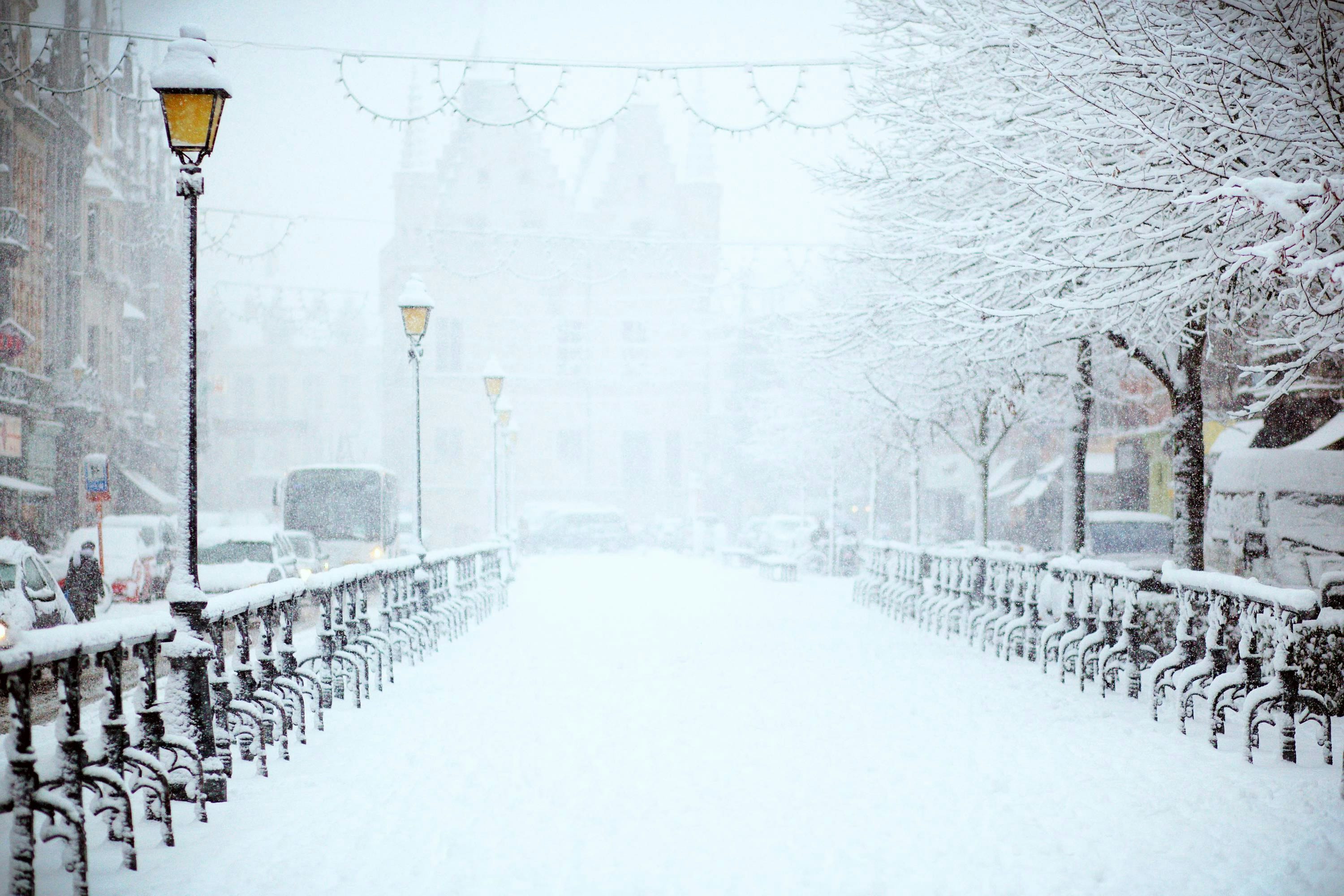
Slowly, the world begins to adapt and schools open, cars get moved (even if they are pushed), roads become clearer. And then, as the snow began to melt, things somehow got worse.
Ice everywhere.
It was in these, not-so-snowy-very-icy conditions that I was walking home – and thinking.
Snow forces you to slow down.
Your steps shorten. Your weight shifts more carefully. You pay attention in ways you don’t usually have to. And, come to think of it, heat does something similar. When the day is heavy and warm, urgency drains away. You linger in the shade. You accept that not everything will get done.
Different seasons. Different sensations. The same interruption.
I was mid-thought – enjoying where my mind was wandering – when my foot slipped and jarred me back into the moment.
Right. Pay attention to the road ahead.
So I adjusted. I stepped into the road where the snow had been cleared, where I thought it would be safer. Just a few metres from home now. Nearly there.
And then – in the blink of an eye – wham.
Feet out in front of me. Arm down to break the fall. Whack. My head hit the ground.
How could I be so stupid?!
There was the shock first. That strange, hollow pause where everything feels distant. Then the temporary loss of sensation in my arm. Then the pain. Then – once I realised I could stand – the embarrassment. A quick look around. I thought no one was watching. Good.
I took a few sheepish steps back towards home, trying to walk it off, trying to convince myself it wasn’t as bad as it felt.
And then a voice. “You alright, mate?” A neighbour had seen the whole thing. And with that, the embarrassment arrived properly – like a wave. “I’m fine, mate – thanks!” I shouted back. Which was, quite obviously, a lie. Just an instinctive attempt to save face. To pretend I was more in control than I actually was. To move past the moment as quickly as possible.
What struck me later was how automatic it had been.
I hadn’t paused to check whether I was fine. I hadn’t noticed the pain properly, or the shock, or the way my arm felt strangely heavy. I’d simply reached for the line I always seem to reach for when something goes wrong.
I’m fine.
It’s such an ordinary phrase. Almost meaningless. And yet it does so much work for us. It keeps things moving. It closes conversations before they open. It protects us from awkwardness, from sympathy, from being seen when we don’t quite have ourselves together. And in that moment, lying on an icy road, surrounded by the evidence of my own clumsiness, I realised how deeply practiced I am at it.
Not at lying, exactly.
At performing.
At presenting a version of myself that looks a little more capable, a little more in control, a little less in need than the truth.
What made it stranger still was how unnecessary it all was. I wasn’t the only one slipping that week. Half the country seemed to be walking more carefully, laughing at themselves, helping strangers up from pavements. Falling over had briefly become…normal.
There was no judgement in his voice. No rush to fix me. Just a simple human question.
Are you alright?
And still, my instinct wasn’t honesty. It was control. It was “I’m fine” when there was absolutely nothing wrong with saying, “Actually, I’m not.”
The snow and ice had already slowed the world down. Now my body was insisting on a slower pace still. And perhaps – I’m beginning to wonder – it wasn’t only my walking that needed to change. There is something about moments like this – when movement is interrupted, when control slips away – that invites us into a different way of being.
Stillness.
Not the chosen kind. Not the sort we plan for with candles and quiet music and good intentions.
The kind that arrives without asking.
Once I got home, once the adrenaline wore off and the pain settled in, I realised that my day had quietly changed shape. Everything took longer. Getting dressed. Making a cup of tea. Sitting down. Standing up again. Even resting required attention.
The world outside had slowed because of the weather. Now my own body was insisting on its own version of the same thing. And in that enforced stillness, I began to notice things I usually hurry past.
How quickly I want to move on from discomfort. How instinctively I hide weakness. How rarely I allow myself to simply be where I am.
Stillness, I’m learning, is not always peaceful. Sometimes it’s awkward. Sometimes it’s frustrating. Sometimes it is the place where the stories we tell ourselves – about being capable, composed, in control – begin to loosen their grip.
Limits have a way of doing that too.
The body is an honest teacher. It doesn’t negotiate. It doesn’t respond well to being ignored. An injured arm names a boundary you can’t pretend isn’t there. It reminds you – quite firmly – that you are not endless. That you live within edges. That you are made with limits, not in spite of them.
And yet so much of the way we live seems to suggest otherwise.
We push through tiredness. We override seasons. We flatten the year into one long stretch of output and expectation. Even winter, for a long time, barely counted. The Roman calendar once ran for ten months – spring through autumn – leaving the colder, quieter months simply…unnamed. Uncounted time. Time without harvest, without campaigns, without visible productivity.
And still, winter kept doing its work.
Quietly. Beneath the surface. In rest and preparation. Perhaps limits are not interruptions to the journey after all. Perhaps they are part of the way.
There is something annoyingly wise in the rhythms we cannot control.
Winter slowing the world down. Heat insisting we rest. Bodies that need sleep, seasons that refuse to hurry, days that will not stretch as far as we want them to. Perhaps stillness and limits are not problems to solve, but gifts we are meant to receive.
I’ve been wondering whether part of our difficulty with faith comes from the way we separate things out. Following Jesus over here. Ordinary life over there. God on certain days and quiet moments, the rest of the week given over to getting on with things. And yet, if the call of Jesus really is to love God and love others, all the time, then surely there is no neat line between the two. There is no “spiritual life” and “real life”.
There is just life.
Which raises a gentler, harder question.
How do we love – truly love – in a way that lasts?
How do we keep paying attention, keep offering patience, keep choosing kindness, when we are tired, hurried, overwhelmed, or pretending we are fine?
I’m beginning to suspect that the answer is not found in trying harder, or moving faster, or learning better techniques. It may be found in learning to live within the rhythms we were given. Stillness that teaches us to notice. Limits that remind us we are human. Seasons that insist we cannot be productive all the time, or strong all the time, or generous all the time without first being cared for.
Perhaps this is how a sustainable journey is shaped.
Not by separating faith from the rest of life, but by allowing the pace of life itself – the weather, the body, the year – to form us into people who can love more gently, more honestly, and for longer than we otherwise could.
As this year begins, more slowly than I expected, I’m trying to stay with what this pace might be teaching me. Paying attention to the weather. To my body. To the annoying wisdom of limits.
I didn’t choose this pace.
But for now, I’m learning to keep it.
And I find myself wondering – without answers – whether stillness, and limits, and the rhythms of the year might be some of the ways God is teaching us how to walk this journey well.
Josh | A Curious Follower
A Curious Follower is a space for anyone who’s learning to slow down, live with intention, and follow the quiet tug of something deeper.
You can subscribe to stay connected, share this with someone who might need it, or simply leave a thought below. I’d love to hear from you.